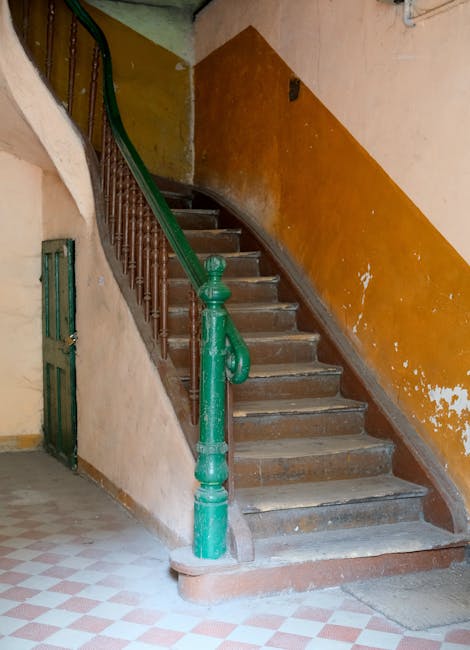
Cambridge Heath Road removals guide for tight staircases
If you are moving on or near Cambridge Heath Road, tight staircases can turn an ordinary removal into a proper balancing act. Narrow turns, awkward landings, low ceilings, and that one bannister that seems to stick out just enough to cause trouble... yes, it can get a bit fiddly. This Cambridge Heath Road removals guide for tight staircases is here to help you plan smarter, move safer, and avoid the kind of stress that sneaks up halfway through the day.
Whether you are shifting a sofa up a Victorian stairwell, carrying boxes into a top-floor flat, or trying to get a bed frame past a sharp bend, the trick is rarely brute force. It is preparation, measurement, sequencing, and a bit of local street-level common sense. In this guide, you will find practical steps, realistic risks, useful tools, and a few hard-earned tips that make tight stair moves much easier.
Why Cambridge Heath Road removals guide for tight staircases Matters
Tight staircases change the whole feel of a move. On paper, a wardrobe is just a wardrobe. In a narrow staircase, it becomes a geometry problem with bruises waiting in the wings. Cambridge Heath Road has plenty of homes and flats where access is not generous, and that means removals need more than a van and a strong back.
The real issue is not just size. It is shape, weight distribution, turning space, grip, and timing. A long item may be light enough to carry, but one awkward corner can make it impossible to angle correctly. A heavy item may fit the stairwell, but not the landing. And if you are moving during a busy part of the day, getting in and out cleanly matters too.
That is why a guide focused on tight staircases is useful. It gives you a way to think through the move before the first box is lifted. And, truth be told, that planning usually saves more time than people expect.
For bigger or more awkward moves, it can help to look at broader support options such as flat removals in Bethnal Green or a flexible man and van Bethnal Green service when access is a bit more complicated than standard ground-floor loading.
How Cambridge Heath Road removals guide for tight staircases Works
The process starts before moving day. You assess the staircase, the items, the route, and the point where things will need to tilt, rotate, or pause. The aim is to avoid surprises. Simple idea, but it makes a huge difference.
Most tight-stair removals follow the same basic logic:
- Measure first - check the widest, narrowest, and most awkward points.
- Break down furniture - remove legs, shelves, doors, or headboards where possible.
- Wrap and protect - keep edges, paintwork, and banisters safe.
- Assign roles - one person leads, one stabilises, one watches the corners.
- Move in stages - do not rush the turns.
In practice, this often means the staircase is treated almost like a route map. The team checks where a mattress will bend slightly, where a sofa will need a pivot, and whether a chest of drawers should go up or down the stairs with straps and extra padding. Not glamorous, but effective.
If you are still at the planning stage, it is worth pairing this with smart prep from smart decluttering tactics for a smooth move and practical packing hacks that make moving easier. Less clutter means fewer trips, and fewer trips mean fewer chances to snag a corner on the stairs.
Key Benefits and Practical Advantages
A well-planned staircase move is not just safer. It is calmer, quicker, and less likely to damage your stuff or the building. That sounds obvious, but in a real move, obvious things get forgotten fast.
Here are the main advantages of planning properly for Cambridge Heath Road removals with tight stairs:
- Less risk of damage to furniture, walls, and bannisters.
- Less physical strain for everyone involved.
- More predictable timing, which helps if lift access is unavailable or the street is busy.
- Better space management on landings and entrances.
- Fewer delays caused by items that simply will not turn on the first attempt.
There is also a quiet confidence that comes from knowing the plan. You are not improvising while standing on a half-landing with a table leg in one hand and a sofa corner digging into your shoulder. That matters. Especially if the building is old and the staircase has one of those lovely, characterful but slightly unforgiving turns.
Expert summary: tight staircase removals go best when size, weight, route, and order are planned together. The biggest problems are rarely the biggest items; they are usually the awkward ones that were never checked properly.
For bulky furniture, a specialist approach can be helpful. Services like furniture removals in Bethnal Green are designed for the kind of pieces that need extra care, while storage support such as storage in Bethnal Green can give you breathing room if the staircase timing or property access does not line up neatly.
Who This Is For and When It Makes Sense
This guide is especially useful if you are in a top-floor flat, a converted terrace, a period property, or anywhere with narrow internal access. Cambridge Heath and the wider East London area have plenty of homes where stairs are the main obstacle, not the distance to the van.
You will probably find this relevant if you are:
- moving into or out of a flat with a tight stairwell
- trying to move a sofa, wardrobe, bed, or mattress
- organising a student move with limited help
- planning a same-day move and need things done efficiently
- moving office items through shared stairs or narrow service access
It also makes sense if you are deciding between doing it yourself and booking professionals. To be fair, not every move needs a full team. But once you have a bulky item, a twisty landing, and a deadline, the balance changes pretty quickly.
For people with tight schedules, a same-day removals option in Bethnal Green can be a practical fallback. And if you want a more general overview before deciding, the services overview gives a useful sense of what different removal support can cover.
Step-by-Step Guidance
Here is a clear way to approach a staircase-heavy move without turning it into a saga.
1. Measure the awkward parts, not just the obvious ones
Measure the width of the stairs, the landing depth, the height under any overhangs, and the turning points. The key word is turning. A lot of items fit on a stair run but fail at the corner.
2. Identify the items most likely to cause trouble
Long mirrors, mattresses, bookcases, sofas, headboards, and large appliances are the usual suspects. Pianos are in a category of their own, and not the sort you casually carry while chatting. If one is involved, read up on why DIY piano moves are usually a bad idea.
3. Strip furniture down before moving day
Remove legs, shelves, drawers, cushion packs, and anything that makes the shape bulkier than needed. Keep screws and fittings in labelled bags. Small effort, big payoff.
4. Pack by access, not just by room
One clever move is to pack the items needed last in easy-to-reach boxes and put the fragile or oddly shaped items somewhere that does not block the staircase. If you are unsure how to organise the load, the advice in package your items and wait for us to come is a handy reminder to have things ready before the team arrives.
5. Protect the building and the item
Use blankets, corner guards, floor runners, and grip gloves where needed. Banisters scratch easily. So do painted walls, especially in older properties. It only takes one clumsy turn to leave a mark you will be staring at for months.
6. Move the heaviest items with a plan for each turn
Do not just start walking. Pause at each landing, reset the angle, and communicate clearly. One person should call the movement. The others should follow that lead, not improvise.
7. Use the van and loading order sensibly
Items that are hardest to manoeuvre upstairs should usually be loaded in a way that keeps them accessible at the right time. If timing matters, a service like best-time delivery planning can help you coordinate with building access, parking, or key handover windows.
8. Do a final check before the last lift
Look for missed screws, loose packaging, trapped cables, and anything left on the stairway. One item left on the landing can create a surprising bottleneck. Happens more often than you'd think.
Expert Tips for Better Results
A few small decisions can make tight-stair removals much smoother. These are the things experienced movers tend to do almost automatically.
- Use two people for awkward items whenever possible. Even light pieces can behave badly on stairs.
- Take doors off hinges if they are in the way and it is safe to do so.
- Keep one stair clear wherever possible so people are not trapped mid-move.
- Wear proper footwear with grip. Slippery soles and old stair treads are a poor mix.
- Pad the corners first before the heavy item starts moving.
- Use a measured pause at every landing rather than pushing through in one go.
If you have ever tried to edge a sofa around a bend while someone says, "a bit more to the left," you will know why calm communication matters. It is not a race. It is a sequence.
For people who want extra help with the physical side, this blog on lifting heavy objects more safely offers useful technique ideas, and the article on kinetic lifting explains why good body mechanics matter even outside sport.
Common Mistakes to Avoid
Tight staircases expose mistakes quickly. What looks fine in the hallway can go wrong as soon as you hit the first turn. Here are the main problems to avoid.
- Not measuring the staircase properly and assuming the item will "probably fit."
- Forgetting about the landing, which is often the real bottleneck.
- Leaving furniture assembled when it should have been broken down.
- Using too many people for a small item, which can create confusion. More hands are not always more help.
- Rushing the first lift and losing control of the angle.
- Ignoring wall and floor protection, then regretting it later.
- Packing boxes too heavily, which makes them clumsy on stairs and unpleasant on the arms.
One small but common issue: people often treat staircase access as a last-minute detail. It should be one of the first things you check. Not after the van is outside. Not after everyone's already tired. First.
If your move is still in the organising phase, some of the stress can be reduced through thoughtful prep like moving house without the stress and a good cleaning handover using a thorough house cleaning guide once the last box is out.
Tools, Resources and Recommendations
You do not need a van full of specialist kit for every staircase move, but the right tools make life easier. Sometimes much easier.
| Tool or item | Why it helps | Best use |
|---|---|---|
| Furniture blankets | Protects edges, paintwork, and surfaces | Sofas, tables, wardrobes, and appliance wrapping |
| Straps or lifting harnesses | Improves control and reduces strain | Heavy items on stairs or long carries |
| Floor runners | Helps protect treads and hallway flooring | Shared entrances and narrow stair runs |
| Corner protectors | Prevents scuffs on walls and furniture corners | Turning points and tight landings |
| Labels and marker pens | Stops small parts getting lost | Furniture dismantling and box organisation |
For packing supplies and box planning, the packing and boxes service is a sensible place to start. If you need a van size that suits a compact access point, the removal van option can help you match the vehicle to the job rather than overcommitting.
And if your move involves something delicate or unusually heavy, a more tailored service such as piano removals may be the safer path. Sometimes the sensible decision is the one that saves your back and the building.
Law, Compliance, Standards, and Best Practice
For a domestic removal, there usually is not a long legal checklist sitting in the middle of the staircase. But there are still important expectations around safety, access, and care. In the UK, moving teams are generally expected to act with reasonable caution, protect property where possible, and avoid unsafe manual handling practices.
Best practice usually includes:
- planning lifting tasks to reduce avoidable strain
- using suitable equipment where needed
- making access routes clear before lifting begins
- taking care on shared stairwells, especially in flats and converted buildings
- checking parking or loading arrangements in advance, where relevant
If a building has shared access, residents and landlords may also expect movers to keep noise, obstruction, and damage to a minimum. That means covering floors, working neatly, and not leaving boxes blocking exits. Pretty standard, but worth saying.
It is also wise to check a provider's insurance and safety information before booking. That is not just box-ticking. It is the sort of detail you hope never matters, until it does. For general confidence about how a provider works, pages like health and safety policy, terms and conditions, and pricing and quotes help set expectations clearly.
Options, Methods, or Comparison Table
There is more than one way to handle a move with tight stairs. The best choice depends on the item, the property, and how much risk you want to take on yourself.
| Method | Best for | Pros | Trade-offs |
|---|---|---|---|
| DIY move with friends | Small loads, light furniture, simple access | Lower upfront cost, flexible timing | Higher risk of injury, damage, and delays |
| Man with a van | Moderate loads, local moves, short notice | Good flexibility, practical for narrow access | May still need extra help for large items |
| Specialist removal service | Bulky, valuable, or difficult items | Better planning, equipment, and handling | Usually costs more than a basic DIY move |
| Split move with storage | When access, keys, or timing do not line up | Reduces pressure on moving day | Requires extra coordination |
In a tight-staircase scenario, the right method is often the one that reduces handling, not the one that feels cheapest at the outset. That is especially true for awkward flats, top-floor homes, or jobs where the route is more difficult than the item itself.
Case Study or Real-World Example
Here is a realistic example from the kind of move people often face on Cambridge Heath Road. A couple was leaving a third-floor flat with a narrow stairwell and a sofa-bed that had looked manageable in the living room. Once they reached the stair corner, though, the frame would not take the turn cleanly.
Instead of forcing it, the team paused, checked the angle, removed the feet, wrapped the exposed corners, and shifted the approach so the item could be tilted in a more controlled way. They also cleared the landing so there was room to reset between attempts. It took a few extra minutes, but not much more than that. More importantly, nothing got scraped and nobody had to muscle through a bad angle.
The same move also involved a mattress and several boxes. The mattress was moved first because it was light but awkward, while the heavier boxes were left until the stairs were clear. That sequencing made the whole job feel smoother. Small choice, big effect.
And this is where the practical part matters: a good move is rarely about one clever trick. It is usually a few ordinary decisions done properly, one after the other. Nice and steady.
Practical Checklist
Use this checklist before moving day. It saves time and, frankly, a fair bit of frustration.
- Measure stairs, landings, doorways, and awkward bends.
- Check whether furniture can be dismantled safely.
- Label screws, bolts, and fittings in sealed bags.
- Pack boxes to a sensible weight, not just to fill them.
- Protect walls, floors, bannisters, and furniture edges.
- Decide which items move first and which need extra care.
- Confirm parking, access, keys, and arrival time.
- Keep hallways and stairs clear of loose items.
- Wear sturdy shoes and comfortable clothing for lifting.
- Have a plan for storage if the new place is not ready yet.
If you need a temporary holding point between properties, storage in Bethnal Green can take the pressure off. That option is especially useful when stair access, keys, or completion timings do not line up neatly. Which, let's be honest, happens a lot.
Conclusion
A Cambridge Heath Road move with tight staircases does not have to become a drama. If you measure carefully, dismantle what you can, protect the building, and choose the right moving method, the process becomes much more manageable. The staircase may still be narrow. The corners may still be annoying. But the move itself can stay calm and controlled.
What matters most is planning for the real shape of the job, not the ideal version of it. Once you do that, tight stairs stop feeling like a surprise and start feeling like a detail you have already handled.
If you are comparing options or want help shaping a move around difficult access, explore the wider removal services in Bethnal Green or reach out through the contact page for a straightforward conversation about what you need. A little planning now can save a lot of lifting later.
Get a free quote today and see how much you can save.
Sometimes the smoothest move is the one where everyone pauses, breathes, and gets the angle right the first time. That bit alone can change the whole day.
Frequently Asked Questions
How do I know if my sofa will fit up a tight staircase?
Measure the sofa at its widest points, then compare that with the narrowest stair width and the landing space. The turning angle matters as much as the width, so a sofa that looks fine in the hallway may still fail on the bend.
What should I measure before a staircase move?
Measure stair width, landing depth, ceiling height at turns, doorway openings, and any overhangs or rails that reduce space. If you are moving bulky furniture, measure the item while it is in its largest usable shape.
Can movers take furniture apart on site?
Often, yes. Many removals can be made easier by removing legs, shelves, or headboards before the lift starts. Just make sure the item is safe to dismantle and that you keep all fittings together.
Is a man and van service enough for a flat with narrow stairs?
Sometimes it is, especially for smaller loads or local moves. For heavy, valuable, or awkward items, you may want something more specialised. A lot depends on the size of the item and how tight the access really is.
What items are hardest to move on narrow stairs?
Sofas, wardrobes, mattresses, bed frames, bookcases, and pianos usually cause the most trouble. They are either bulky, awkwardly shaped, or difficult to grip safely.
How can I reduce damage to walls and bannisters?
Use blankets, floor runners, and corner protection before the move starts. Also keep the stairwell clear, move slowly at corners, and have one person guiding each item so it does not swing into the wall.
Should I empty drawers before moving furniture upstairs?
Yes, in most cases. Empty furniture is lighter and easier to control. Leaving drawers full can shift the balance and make the item much harder to turn on a staircase.
What if the move date and key handover do not match?
That is where storage can help. A short-term storage plan can bridge the gap between properties and keep the move from becoming a rushed, all-day scramble.
Are there any safety rules I should follow when lifting on stairs?
Yes. Use proper lifting technique, avoid twisting while carrying, do not overload boxes, and ask for help with items that feel unstable. If something feels too heavy or too awkward, stop and reset rather than forcing it.
Can I move a mattress up a tight staircase alone?
You might manage it if it is small and the staircase is simple, but it is usually not the best idea. Mattresses are awkward to control, and one slip on a turn can cause damage or strain. A second pair of hands makes a big difference.
How far in advance should I plan a tight-staircase move?
As early as you can. Even a short move benefits from a proper access check, a packing plan, and a clear order for heavy items. The earlier you plan, the fewer surprises you get on the day.
What should I do if the item almost fits but not quite?
Do not force it. Pause, re-angle, remove any detachable parts, and assess whether a different route or a different method is needed. Sometimes the safest answer is to bring in a more suitable moving setup rather than push through.